


The technique that helps build brand differentiation is called Brand Terminology
Spread the loveWhen I say I’m creating a terminology base for organizations and companies, not everyone understands what I’m talking about. But the guidelines I’m building constitute the foundation every successful brand needs – it’s called a brand basis. 6 elements for a brand basis that I create for my clients, and they make all […]

When I say I’m creating a terminology base for organizations and companies, not everyone understands what I’m talking about. But the guidelines I’m building constitute the foundation every successful brand needs – it’s called a brand basis.
6 elements for a brand basis that I create for my clients, and they make all the difference for your business!
Today, I’m writing about a topic that concerns both companies and organizations, and even small businesses, yet they tend to overlook it and start writing content and selling without dwelling on it. And that is, of course, a very big mistake because it’s about the branding base that establishes trust and attracts the right customers. And of course, I’m talking about the branding base.
I understand that when you think of a brand, you immediately conjure up images of logos, brand colors, fonts, and perhaps even the overall composition of brands you’re familiar with. There’s no denying the importance, even criticality, of the visual aspect in brand memorability. However, I’m specifically addressing the terminological branding, or what I prefer to call the brand basis.
In my perspective, no matter how attention-grabbing your business may appear, every business dealing with customers needs to establish a solid terminological base. This brand basis essentially represents your brand’s voice, setting you apart and highlighting your uniqueness among peers and competitors alike. By articulating your distinctive position in the business landscape, the brand basis becomes the guidelines of your brand, ensuring, behind the scenes, the fulfillment of the experience your brand promises to deliver to customers, thereby fostering excitement in their support for your product or service.
If you have a small voice saying, “I haven’t formulated a brand basis for my business, and I’m managing just fine,” consider this: establishing that brand basis will not only kindle enthusiasm among your audience for what you’re doing but also facilitate easier transactions. While my emphasis lies on sales, I don’t regard the branding base as merely a marketing tactic; rather, it serves as the bedrock of sustained trust between your business and the audience choosing to align with you.
Operating without the guiding light of the branding base in writing content and executing business actions could lead to considerable confusion regarding what you’re offering and what you’re doing. In the absence of this connection, even customers may hesitate to reach for their credit cards.
So, if you’ve been even slightly persuaded that your business also requires a terminological base, consider the six elements that I invariably develop for my clients. Surprisingly, regardless of the organization’s size, I often discover that these same six crucial elements are missing.
These elements are all put within a single document, spread among the company’s employees and external suppliers responsible for content creation. This fosters gives between the conceptualization of the base and the translation of its content into marketing material.
#1 Values
Your values represent what is important to you as people and how it is expressed within your brand. It’s clear that if I give you a list of 200 values, you will be able to identify with at least 80. A brand cannot encompass so many values. The goal is to try to narrow down the list to 5 central values that drive your activity and can attract the right audience to you.
These values are the guiding principles that will shape every aspect of your business: identity, message, customer experience, customer journey policies, etc…
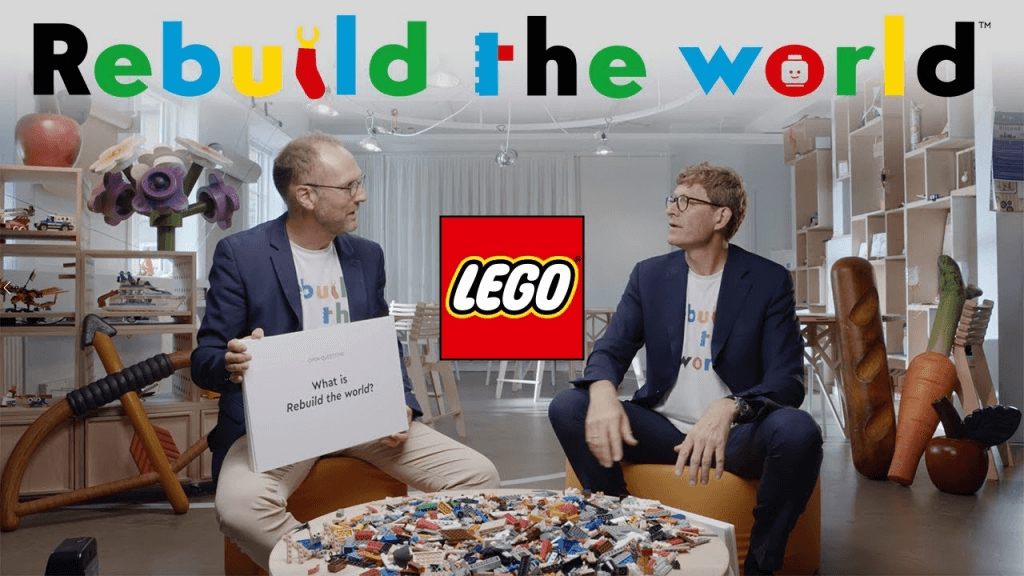
Let’s take LEGO as an example of values present in action and conversation with its audience.
LEGO promotes values of creativity, learning, caring, fun, imagination, and quality. Although children are their primary target audience, this promise also speaks to adults.
The brand aspires to convey a sense of mischief and excitement in all areas of life – regardless of age, location, or gender. Their advertising campaign “Rebuild the World” demonstrates how the boundless creativity of the brand is an undeniable and dominant value. It actually pushes its audience to rebuild, create, and experiment. In other words, alongside creativity, we have quality experience, learning, imagination, and caring. Exactly the brand’s values.
#2 Target Audience
Defining your target audience will help you understand who you are talking to.
The messages coming from your brand will be very different if they are addressed to teenage girls or retired men – even if your product is the same product, let’s say smartwatches. Besides, maybe the design will be different, the purposes of usage will be different, and they will probably try to offer a different sales proposal.
Defining target audiences helps us understand the struggles and pains of the people we want to attract to our brand, and thus talk to them in values we have defined and tailor the message to them in a way that will evoke trust and interest.
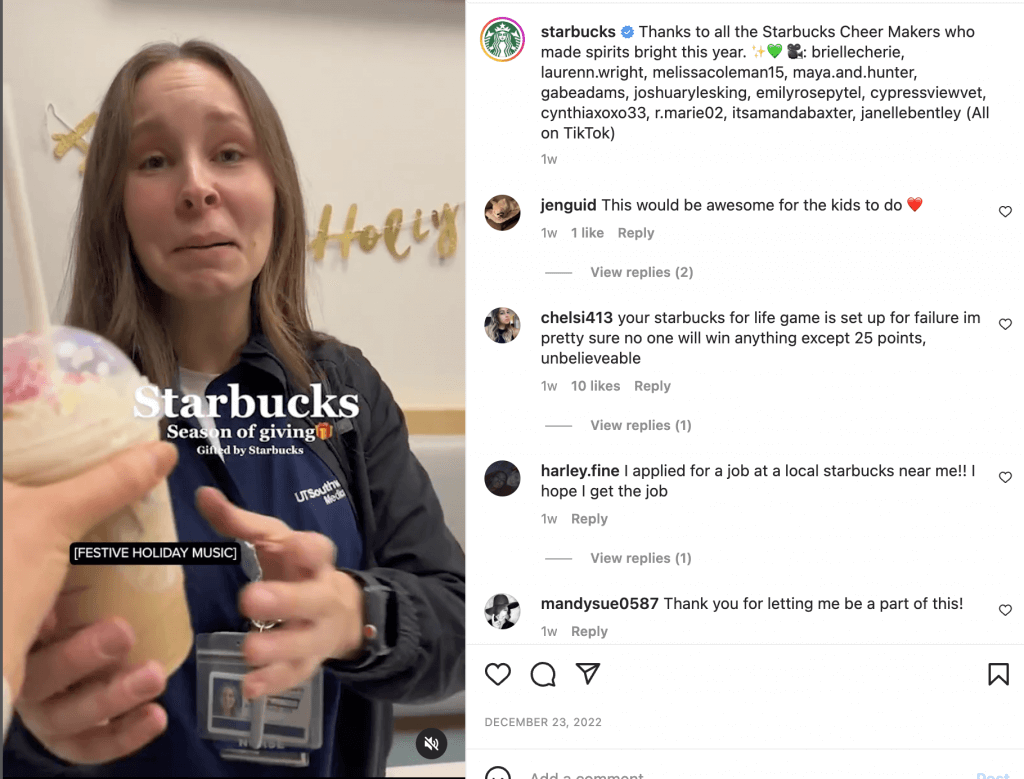
Starbucks Coffee brand doesn’t need us to represent it, but even though we imagined its audience as “everyone,” Starbucks works very hard to create an unforgettable experience for its audience. And believe me, for such a large brand, Starbucks does an insane job allowing its audience to feel special and seen. The brand not only responds very quickly to inquiries on social networks, but it also randomly engages with accounts that follow the brand.
This just shows us that no effort is too small when it comes to social engagement. If someone interacts with your brand, prioritize your time. It’s important.
In my view, the biggest winner is the coffee giant because it can actually learn what works better and what works less well and actually improve the experience it offers its audience.
#3 Unique Selling Proposition | Your Unique Selling Proposition
A unique selling proposition or USP is a short statement that helps your product stand out in its features, in the offer to the customer, beyond the offers available in the market. Your offer should guarantee a benefit or feature that other products or services do not offer or cannot offer.
How can you define your unique selling proposition?
Try to understand…
- What it is. What you are selling.
- How it works. What is the way to solve their problem?
- Where to get it. Meaning, what they need to do to purchase the product or service.
- When to expect it. Do they get direct access, need to wait for delivery, or a specific date?
- How much it costs? What is the financial price they will pay for your offer?
- brand basis and Your Unique Selling Proposition
#4 Mission Statement
A mission statement tells our audience why we exist and where we are going. It is one of the strongest messages we can convey to our audience because it defines the purpose behind the brand.
It is a sentence that describes the value we give to our audience and what they can expect from our content. For example, it can be understood that I allow for creating a conversation about content strategy, tools, and skill development… The same mission statement serves as an anchor – every piece of content that comes out of MethodQueen must meet the criteria of my mission statement.
#5 Brand Personality
Your brand’s personality is defined by genuine traits, expressions, and human emotions. It serves as an identity that effectively conveys your brand’s messages to the target audience.
Does your brand have seriousness and composure, yet assertiveness, similar to the British Royal Family’s brand? Or does it radiate youthfulness and vibrancy, reminiscent of the social brand of Red Bull?
Are you the embodiment of your brand—a digital nomad chronicling adventures? Or perhaps a vegan blogger and chef with roots in Italy, whose actions are shaped by her upbringing? These expressions of your brand’s personality not only influence the content you create and the messages you share with your audience but also manifest in everyday phrases, recurring words, and even in the way you sign off emails.
These aspects serve as communication channels with your customers, establishing a sense of consistency in your brand’s personality. You may have noticed that I consistently sign off my newsletters with “As always, I’d love to hear what you think” or end my emails with “Have a magical day, Keren”. These habitual practices provide insights into my brand’s personality for the audience
For large organizations or companies with employees, I like to create a small lexicon that allows all employees to sound the same to customers. It’s just like hearing “good morning” when entering a Benedict at 23:00. It brings a smile to your face.
Of course, all this terminology needs to fit the target audience you have defined.

#6 Brand Story
There’s no denying that storytelling has emerged as a crucial marketing tool. However, it’s essential to note that a Brand Story doesn’t have to be intricate.
Certainly, when we discuss impactful stories, Apple’s narrative often comes to mind—how Steve Jobs, after dropping out of college, embarked on a calligraphy course that influenced the fonts we see on computers today. Or the iconic image of him tinkering in his parent’s garage to create the first Macintosh.
Yet, more often than not, brand stories are humble, featuring less flamboyant main characters.
Of course, if there’s a fascinating tale behind the creation of a product, by all means, let’s share it.
When I think of compelling brand stories, they don’t always fit neatly into the classic narrative structure of “hero, conflict, triumph.” Rather, I focus on the connection with our target audience. Throughout the development of a product or service, we identified their needs and pains.
Maybe we developed a baby-wearing product because we experienced firsthand the challenges of existing options when we became parents. Or maybe, in a senior role, we noticed a gap among our clientele and devised a solution accordingly.
These narratives are just as valid as tales of conquering odds or technological breakthroughs.
The brand story forms an integral part of your terminological base. Beyond their persuasive and memorable qualities, stories foster a deeper connection with your community. And when we engage with emotion, our barriers are lowered.
In summary, crafting a terminological base requires thorough introspection and investment of time. Yet, this foundation not only refines your overarching messages and sales pitches but also shapes your design language and enhances communication with your audience, making your brand approachable and recognizable.