

Don’t miss out on customers: How to create a call to action converter
Spread the loveThe most common question I ask my clients when they generate content is “What is the call to action?” This article will sort out the types of calls to action and how to use them correctly. Let’s be real here, when we create content, it’s not just about providing answers or helping people […]
The most common question I ask my clients when they generate content is “What is the call to action?” This article will sort out the types of calls to action and how to use them correctly.
Let’s be real here, when we create content, it’s not just about providing answers or helping people save a buck on a product. It’s about crafting our brand, fostering a connection with our brand voice, and ultimately, guiding them into our marketing funnel.
If I’ve caught your attention, I’m sorry.
But seriously, my focus is on creating content that adds significant value while also drawing in a very specific audience.
I always stress to my clients the importance of considering the action they want their readers to take. Whether it’s linking to related content (like I did above), offering a downloadable guide, encouraging contact, or facilitating a purchase.
Call to Action
Although not all businesses work with a predefined marketing strategy, and I encounter more and more businesses and organizations that are “flowing,” I hope you have at least marketing goals. Small business development goals: increasing revenue, establishing the brand and increasing credibility, expanding distribution lists, and even creating partnerships.
Ultimately, such and other calls to action help our audience to enter our marketing channels.
Landing Pages
(Call to action through landing pages)
Feel free to drop your email and get the course delivered straight to your inbox. The primary goal of the landing page is to gather user information and “land” them onto a mailing list.
A landing page typically offers “alternative compensation,” which essentially translates to payment in the form of an email, name, and sometimes a phone number (and perhaps additional details). Signing up for a webinar, receiving a complimentary guide, or scheduling a consultation call are all tactics brands use to motivate their audience to take a specific action – to subscribe.
When designing such a page, it’s crucial that the call-to-action is prominent and offers a seamless user experience, making it easy and intuitive to input details – because alongside the call-to-action, the user’s journey and experience are paramount.
Usually, landing pages are distinct from the main website. While they may exist on the same domain (even recommended), they typically don’t provide access to other pages or the website itself. The sole purpose is to capture user information.
Sales Pages
Unlike landing pages, the goal of sales pages is for visitors to make a purchase from us and see their trust in entering their credit card details on our site.
Here, the call to action comes after a journey the user goes through in our content, where we lead them to make the purchase based on the promise of what they will receive.
And you know what they say, promises must be kept. So if you’ve encouraged your audience to make a purchase, make sure you can fulfill the promise.
Meta Descriptions
(Description of your article as a call to action)
If you’re crafting your own content and managing a website, chances are you’ve grappled with the “back end” of content creation.
A meta description is a brief paragraph, typically up to 160 characters (you can exceed this limit, but it’s not recommended), designed to entice content seekers to click through to your page. Essentially, it’s a concise narrative where we lead the reader through a need, a pain point, and a solution—a classic sales process.
So, the next time you find yourself pondering, “Another meta description?” remember that a website and content searchable on Google are long-term investments, and it’s worthwhile to craft compelling calls to action.
There are other forms of calls-to-action, such as posts, sponsored ads, and pay-per-click (PPC). I won’t delve into those in this article, but it’s crucial that every sponsored content includes a clear call-to-action at the end.
Ask your audience to act
https://www.youtube.com/watch?v=A3WdjogEpVA
(Example of an action encouragement request)
I’ve come across posts, articles, and even websites written excellently. But brands expect, “If it’s interesting, it’s already clear how to contact me.” The goal of digital is to enable customers to take action as much as possible and make it clear what is expected of them.
Do you want them to keep following you? Ask those who encounter your content to click “Follow.” They reached the landing page, and you want them to leave details? Use words that clearly indicate what needs to be done. The same goes for purchase, click, share…
We need to be clear with our audience, so they know what action we want them to take.
In my YouTube videos, for example, I mention both at the beginning and at the end that it’s worth continuing to follow me.
The path to purchases begins with trust
(Action encouragement: The path to purchases begins with trust)
The topics I believed would offer the most value to my followers while simultaneously bolstering trust in my brand.
Since the onset of the coronavirus pandemic and the subsequent information overload, enticing the audience to engage in webinars, download guides, or even schedule a free consultation has become exceedingly challenging. Everyone is acutely aware that their time is now more precious than ever.
In the past, a promise of a content strategy guide (available for download from my website’s homepage) could yield 400-500 sign-ups within the first 48 hours. However, today, despite diligent efforts, marketing, and promotion across various groups and newsletters, the total number of sign-ups remains roughly the same.
Gaining trust with the audience over time means providing content that resonates deeply with their needs—content crafted in our unique voice, matched with our colors and infused with our distinct interpretations and touches.
While it may not fit the traditional definition of a “call to action,” I strongly advocate investing in understanding your brand’s voice—its values, tone, and distinctive approach that attracts customers to you.
When customers genuinely connect with what we offer and how we present it, the call to action seamlessly integrates into the trust they bestow upon us.
The journey of entering our marketing funnel and eventually converting hinges entirely on the groundwork we lay over time—the seriousness with which we approach our impact and our ability to influence others in our field.
The call to action is just the button

Every website. Every landing page. Every sales page. Even every post. All of them need a clear description with a flow that works and leads to action.
People who focus only on the call to action and neglect the micro-copy preceding it are missing out big time. Imagine entering a page with a form that says “Leave details” or even something more enticing like “Don’t miss out!” – would you leave your details? Probably not, because you have no idea what it’s about.
The call to action is, in fact, technical. It’s the final thing we do. Leading to a click, a download, a purchase, it’s about using storytelling, building structure, and essentially allowing our audience to feel that taking action is worthwhile.
I see too many websites that are replicas of other sites, made in a perfunctory manner where “things are done.” No thought on the unique tone, clear message, or how to build things so the maximum value reaches the audience.
Our audiences are diverse, we work in different niches, so there’s no one structure that fits all. There’s no “more correct” decision. But my personal recommendation is to try to understand what unique thing you bring to the world, and through that, find the story, structure, and way to lead your audience to action.
Micro-copy
I have an aversion to generic, repetitive, or male-oriented call-to-action if the target audience is mixed.
“For more information,” “Sign up now,” “Buy now!”
I wouldn’t refrain from using such calls to action if there’s additional information to be exposed, a need to sign up now, or a purchase to be made, but I would use such a call to action after using an interesting micro-copy that speaks to my target audience.
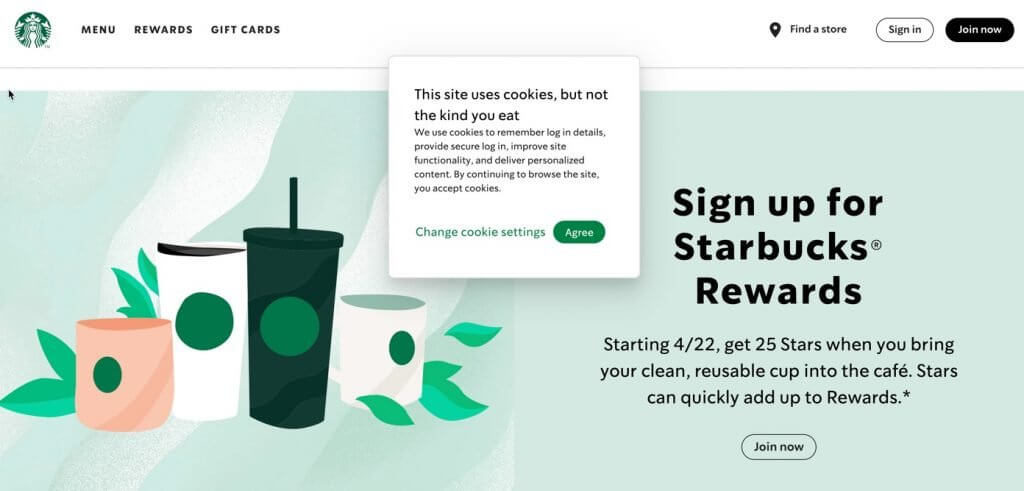
Before choosing the terminology on the button, I’d ask myself a few questions:
What action do I want the audience to take?
How do I want the audience to feel?
Is there an interesting way to connect the wording to the preceding text?
What experience do I want to create?
Is there a message that can be conveyed through the wording? (e.g., creativity, urgency).
Note:
E-commerce stores and marketplaces do need to use consistent call-to-action on their products because it provides certainty and isn’t tiresome. When there are many products, ensure consistency in micro-copy, and maybe change the call to action only on specific offers.
Create a sense of urgency
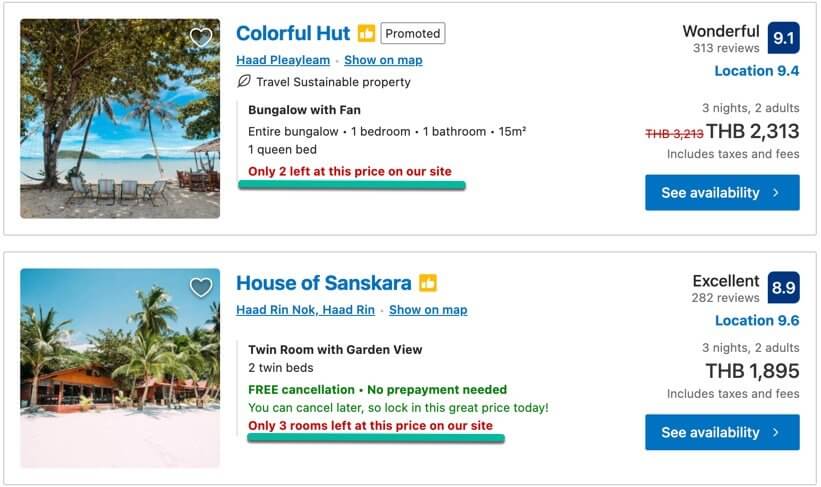
After understanding that it’s important to create a clear structure and also to use microcopy correctly, my sales manager said, “A sense of urgency is the key.” And she’s right.
We use words whose purpose is to prompt someone else, whom we’ve probably never met, to take action. In other words, the words we need to aspire to are verbs. Click, purchase, download, earn, learn… all of these are verbs.
I suggest creating a sense of urgency using words with a finite time or explicit instruction like: “Quick download,” “Don’t miss out!,” and “One-time offer.”
Yes, I agree that these examples are a bit cheesy, they were written to provide examples – I really recommend thinking about the wording that suits you and how you can create the same sense of urgency with words that fit your business.
It all depends on your familiarity with your target audience. If you manage to crack the language your audience speaks in the context of your work, there is a high conversion potential there.
On my course page, I offer 3 free lessons, and there the call to action is “Click to watch.” I chose this microcopy because one of my clients said something like, “I love that with you, things are easy, just click and it happens.” So I literally asked something a client said to me and translated it into a call to action.
In the course previously called “Business Storytelling,” now renamed “Action Plan,” two different participants said it was “spot-on” for them. So I reached out to other participants and asked them, “On a scale of 1-5, how much did you feel this course was spot-on for you?” The result was 4.7. Therefore, the call to action beyond the purchase page is “Sounds spot-on for me.”
To summarize
There are many other things you can do to refine your calls to action. You can research competitors and see what they’re using, and maybe get good ideas from there. You can use SEO, that is, use keywords that help with ranking. You can also experiment with A/B Testing with several calls to action.
In conclusion, the choice of calls to action should be conscious.
You need to understand what specific action you want your audience to take and carefully build the content and structure that leads them to that action.
It’s important to weave your character and your brand’s tone into the content and avoid clichés just because it seems to work for others.
One last tip, if you find yourself in a good digital asset and want to take action, ask yourself what structure, messages, and promise made you want to click on that same button.
Good luck 🙂